If you, like me, enjoy listening to a wide range of musical genres, you must enjoy trying new ones. You probably heard about rock music with its dozens of subgenres. What about Anatolian rock? It is probably difficult to connect these two words in your head. However, this type of music exists and has a history dating back to the 1960s in Turkey. This article provides a taste of this music culture, and I warn you that you will be surprised.
Anatolian Rock
Anatolia serves as a geographical bridge between the west and east. Legendary Turkish poet Nazım Hikmet once wrote, “Galloping from Far Asia and stretching into the Mediterranean like a mare, this country is ours.” Turkey, located on the Anatolian peninsula, has had a variety of civilizations throughout history. This diversity can still be seen in almost every aspect of modern Turkish culture. In terms of musical culture, this diversification and bridge function enabled different interpretations of music throughout the country.
We can simply describe Anatolian rock as a mixture of traditional Turkish folk melodies and western rock music.
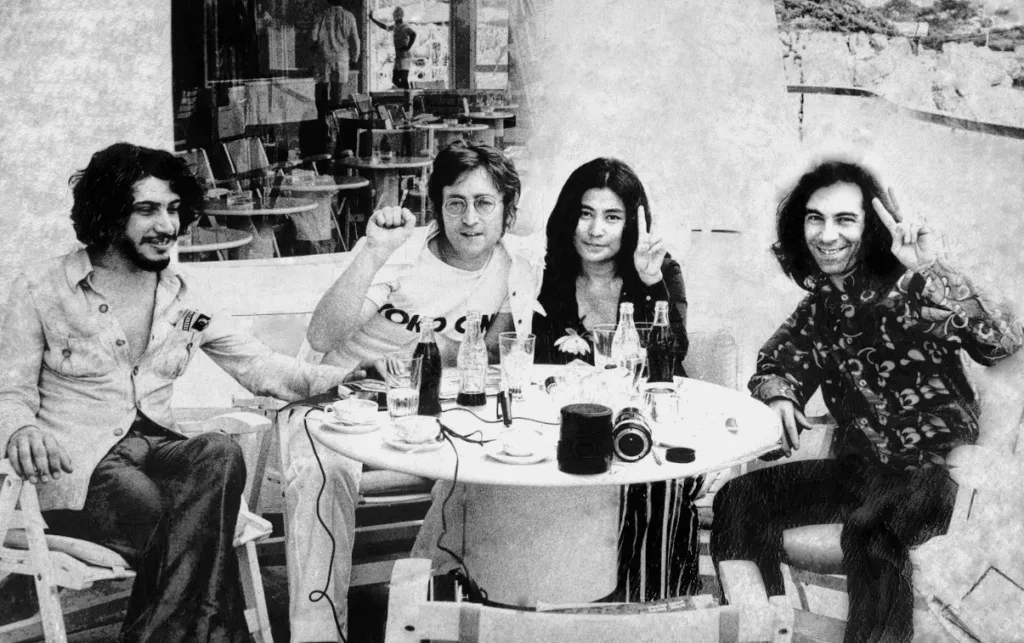
Turkish artists in the 1960s were heavily influenced by western rock musicians and the rock and roll movement. Famous Anatolian rock artists like Erkin Koray, Cem Karaca, and Barış Manço had the opportunity to explore rock music while visiting Western countries as young people. They created unique styles by combining east and west, which we still enjoy after decades. They also used their music to convey messages and criticize the social and political environments of their time. However, the same political environment that they criticized put an end to Anatolian music’s influence after the 1980s. However, some groups continue to carry on the Anatolian rock legacy to this day. We will be talking about them soon.
Key Artists
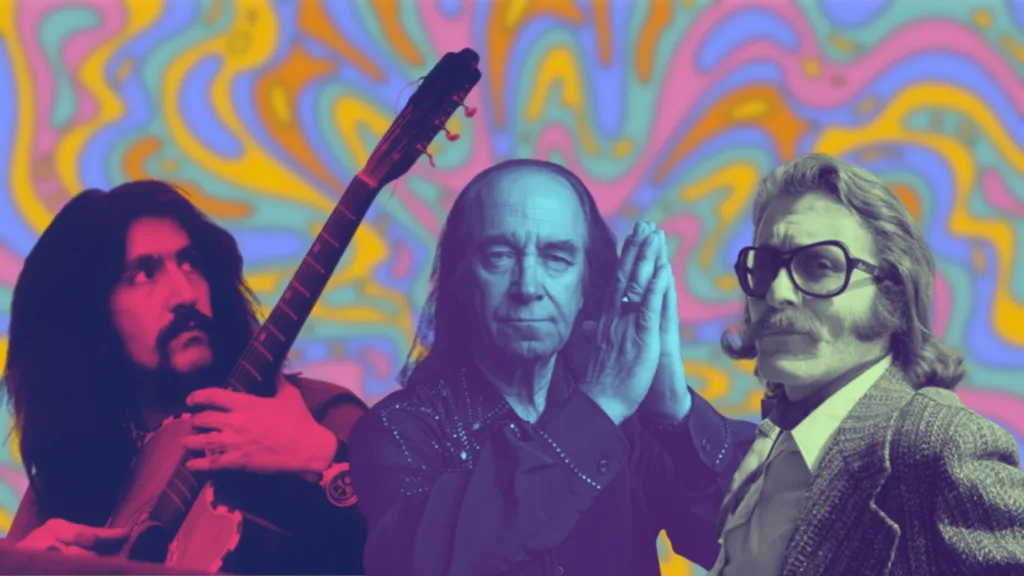
There were many Anatolian rock artists and bands, but a few stood out. There would be no such thing as Anatolian rock without “the big three.” Erkin Koray, Cem Karaca, and Barış Manço had distinct styles, but their music shared a soulful essence.
Erkin Koray
My personal favorite, Erkin Koray, was known for his psychedelic style, but he also wrote hard rock and metal songs. He mastered combining traditional Turkish melodies with progressive rock elements. They collaborated with another Turkish folk singer to create electro saz (a traditional Turkish instrument) for use in their performances. Let us look at some examples of his work and style, but I highly recommend you check out his other works as well.
Seni her Gördüğümde
“Every Time I See You” is one of his most popular songs of all time. It is a passionate love song with smooth vocals and an emotional melody that will make you feel something.
Bir Eylül Akşamı
“A September Evening” is another love song with a peaceful melody and simple yet lovely lyrics. This song also inspired the famous rock song “Paint It Black” by The Rolling Stones.
Allah Aşkına
“For God’s Sake” is considered one of Erkin Koray’s most significant hard rock songs. With an upbeat melody and guitar work. This song also clearly conveys his psychedelic essence.
He has some other beautiful songs too; I recommend you check them out. Cemalim, Züleyha, and one of his English songs, It’s So Long. Sadly, we lost Erkin Koray, or more famously Erkin Baba, in the summer of 2023. However, his music lives on in both our ears and our hearts.
Barış Manço
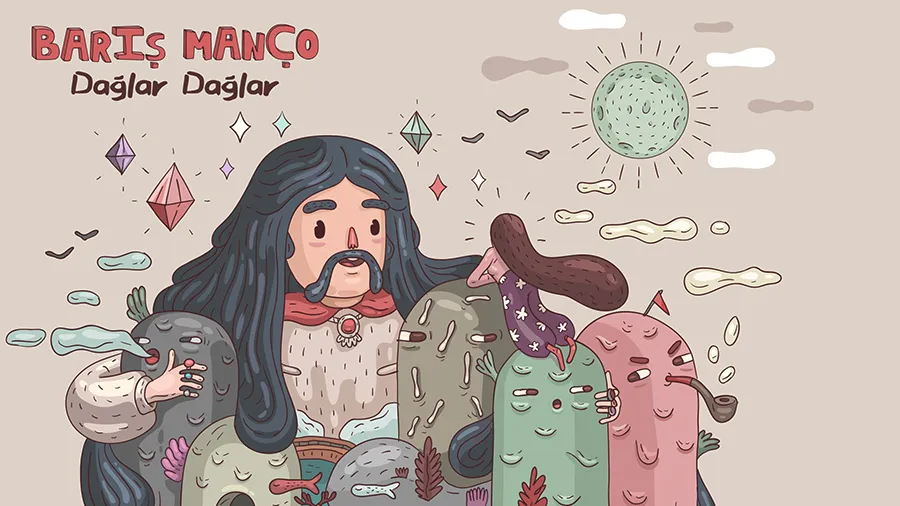
His name, Barış (Peace), reflected his ability to connect with people through music. He was both an artist and a television personality who was concerned with political and social issues. He also pioneered and contributed significantly to Anatolian rock music until his death in 1999. He received tens of different music awards for his over 200 songs, and most importantly, the Turkish government designated him as a “state artist” in 1994. Let us look at some of his work.
Kara Sevda
“Blind Love” is a romantic song, as you can guess from its name. However, instead of an emotional tone, the song has a dynamic tone that gets you pumping.
Gülpembe
Barış Manço wrote this emotional song to his late grandmother, who had the same name as the song. Lyrics underline a deep longing for a beloved person. With an emotional and acoustic melody.
Dönence
Compared to the previous two, this song is on a different level. This song stands out among his work due to its significant psychedelic style.
I already said that the name Barış means peace in Turkish, and according to his son, Doğukan Manço, the artist is the first person named Barış in Turkey. It is no surprise that he is a musical pioneer who is also interested in humanitarian issues. Through his art, he leaves a lasting impression on people’s minds and hearts. Some of the other examples of his music are Dere Boyu Kavaklar, Aynalı Kemer, and Halhal.
Cem Karaca
Cem Karaca is the third Anatolian rock artist among the big three. He is the most important artist in the Anatolian rock music scene. Also the most political one. He was never afraid to criticize politicians and ideologies. His interest in music began at a young age, but he only sang English songs. While in military service, one of his friends performs traditional Turkish folk music, and he suddenly decides to return to his roots. He then collaborated with various Anatolian rock bands, laying the groundwork for Turkish culture.
Resimdeki Gözyaşları
Originally written in Turkish, Karaca also wanted to sing the same song in English. As someone who speaks both languages, the translation of emotions is flawless! He was able to maintain the emotion using the same melody. Here is the Turkish version.
Kara Sevda
“Blind Love” is one of the examples of psychedelic style, with Turkish folkloric elements. Compared to other works of his, this song is not a political critique but an emotional one.
Emrah
Maybe the best song to identify his style is Emrah. He achieved perfection with slow but strong vocals and an east-west musical combination. He also named his only son, Emrah Karaca, after this song. Click for the English version.
Cem Karaca cannot be explained and understood in a blog post. His music served as both an art form and a means of connecting souls. His powerful voice and abilities elevated him to the status of legend, which he continues to hold today. Some of his other works are Islak Islak, Kendim Ettim Kendim Buldum.
Other Important Artists
Because Anatolian rock is made up of two distinct types of music, each work of art features a unique combination of west and east. As a result, we can describe it as a spectrum. If you prefer traditional Turkish melodies, you might like the band “Kardaşlar.”
Moğollar is a well-known Anatolian rock band. They played an important role in transforming traditional songs into rock music. They occasionally collaborated with other Anatolian rock artists.
Anatolian Rock Today
Anatolian rock, despite its age, continues to have a dedicated following. The genre has become increasingly popular in recent years, thanks to modern musical representatives. People began to re-explore Anatolian rock and developed an interest in psychedelic essence. This demonstrates that Anatolian rock music is timeless because the tune is rooted in tradition while also connecting with modernity, which is appealing to many.
“Altın Gün” is one of the most popular Anatolian rock bands today. Their covers of genre classics are enjoyable to listen to. They were also successful in bringing Anatolian rock to the international stage.