
Whether you are an importer or not, you probably heard about the term tariffs. Especially in recent weeks, as tariff controversies have escalated. But, what are tariffs exactly? Most people do not think about it because they believe tariffs have no direct impact on them. However, this thought is incorrect. “A tariff is a customs duty or tax levied on imports of merchandise goods.” (European Commission) Tariffs serve two purposes: increasing government revenue and protecting domestic industries. Tariffs, however, can be used as a political tool in the majority of cases. So it is like a two-edged dagger.
To understand tariffs better, we should know how it works. There are two basic types of tariffs: an ad valorem tariff (percentage of value) or a specific tariff (e.g., $100 per tonne). Tariffs are typically levied on imports, but in some cases they may also be levied on exports.
What Are Tariffs and How Do They Work?
The history of international trade is extensive. Humans have always been socially and economically integrated through the exchange of goods. However, there was a long period of economic history during which people were very aggressive in selling as many goods as possible to other countries. This is known as merchantialism, and it dominated the 18th century. Countries at the time believed that allowing excessive import activity would lead to poverty. They also implemented trade barriers, such as quotas and tariffs on imported goods. They believed that there was a finite amount of wealth that could not be shared by all countries. As a result, only a few countries can have a large slice of the cake, leaving the rest to share.
Adam Smith and David Ricardo’s theory of comparative advantage changed this understanding. Their theory demonstrated that there is no need for protectionism in international trade. It explains how trade can benefit all aspects of the economy, including businesses, countries, and individuals.
A tariff is a customs duty or tax levied on imports of merchandise goods. (European Commission)
When a foreign product enters a country, the government applies a specific rate to that product. And that increases the product’s final price. With the extra price, goods become less competitive than the local products.
There are numerous examples of tariff policies throughout history. For example, the Tariff Act of 1930, also known as the Smoot-Hawley Tariff in the United States, imposed tariffs on 25% of all goods imported into the country. Prior to World War II, the United States was a tariff-based country. Tariffs range from 20% to 50%, sometimes even reaching 60%. They have been “very low” since 1950 or so.
Tariffs used to be a revenue source for governments, but they are now primarily used for political purposes. For example, the United States doubled the tariffs on solar cells and tripled on lithium-ion batteries imported from China in 2024. Of course, the federal government has no need for the money that comes from the taxes on batteries, but it levied those tariffs to protect local producers.
The Economic Impact of Tariffs
According to scientific research in the United States, the aggregate consumer price index (CPI) is 0.3% higher than it would have been if tariffs had not been imposed. This finding came out of the tariffs levied in 2018, with rates ranging between 10 percent and 50 percent.
Trade wars between the United States and China are not new. They have been quite aggressive about this from time to time. Specifically, the United States is imposing severe restrictions on goods in critical industries such as green energy and defence. Restrictive actions, however, are imposed on a wide range of goods and industries. The same study found that raising tariff rates on washing machines immediately increased inflation for both producers and consumers. In conclusion, their analysis suggests producer and consumer prices are about a third of a percent higher in 2018 as a result of higher import tariffs.
In response to the trade war, China increased tariffs on soybeans imported from the United States. Before the tariffs, the US sold 12 billion dollars worth of soybeans to China in 2017. Then, China raised the soybean tariff rate from 1% to 26%. According to a study conducted by the Department of Agricultural and Resource Economics, soybean prices in the United States have dropped by $1.42 as a result of increased tariffs. Because Chinese demand for US soybeans has dropped, domestic soybean prices in the United States have fallen. According to the study, the estimated income loss for soybean producers in Tennessee, USA, is 20 to 23 million dollars statewide. For every dollar loss in producers’ incomes, an additional $0.79 in economic activity (i.e., output) was lost
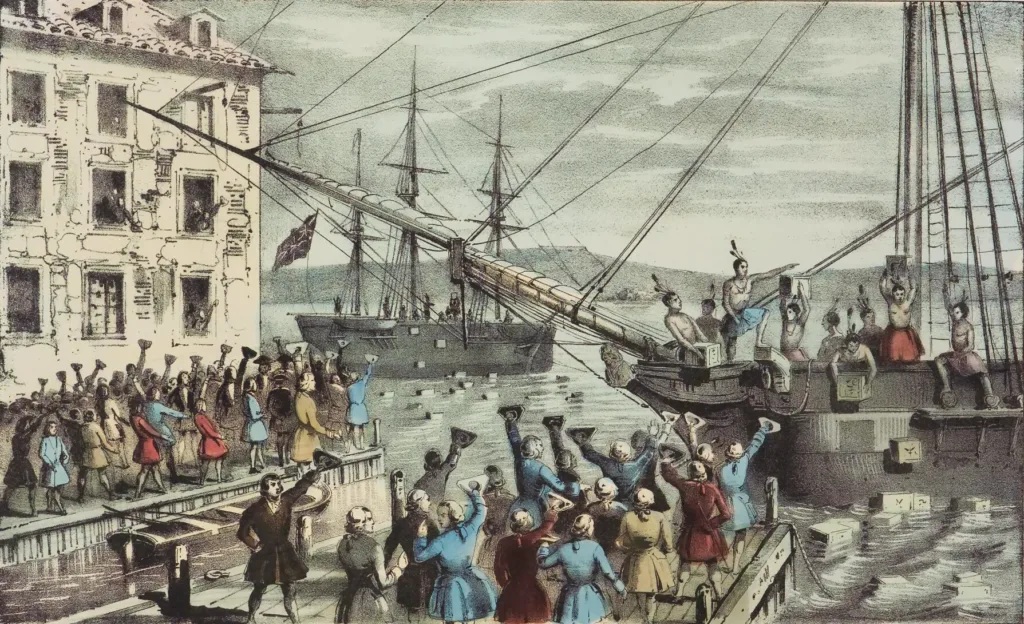
Are There Any Benefits to Tariffs?
Tariffs are widely believed to benefit local producers by reducing the competitiveness of foreign producers. Producers in certain critical or culturally significant industries may require protection. Especially in new and emerging markets. So the government restricts imports in those sectors by imposing tariffs or quotas, or both. In addition, the government generates revenue by collecting import taxes.
The overall effect depends on whether the benefits, like terms of trade gains, outweigh the losses from changes in production and consumption patterns. If the terms of trade gains outweigh the negative effects, the country will benefit. If not, the overall effect is a loss. Restrictive actions generally have a negative impact on a small country by increasing prices and reducing trade.
Conclusion
Tariffs are becoming less popular as trade volumes increase and global ties strengthen. However, they could be effective weapons in trade wars, albeit with some risks. Yes, tariffs might be helpful to shield particular industries and provide short-term benefits. However, they have an adverse effect on long-term growth.
The global consensus on international trade is a non-restrictive trade environment for the benefit of all. International trade has become more liberalised, first through GATT and later through the WTO. However, in recent years, the situation may have changed.
sources
Boer, Lukas, and Malte Rieth, 2024. “The Macroeconomic Consequences of
Import Tariffs and Trade Policy Uncertainty,” IMF Working Paper 24/13.
Mary Amiti & Sebastian Heise & Noah Kwicklis, 2019. “The Impact of Import Tariffs on U.S. Domestic Prices,” Liberty Street Economics 20190104, Federal Reserve Bank of New York.
Smith, S. Aaron & Menard, Jamey & English, Burton C., 2018. “Economic Impacts to Tennessee Soybean Producers and Regional Economies from China’s 25 Percent Tariff on Soybeans,” Extension Reports 302952, University of Tennessee, Department of Agricultural and Resource Economics.
https://dornsife.usc.edu/news/stories/tariffs-explained-by-economics-professor-trade-expert/

