Art is something that we can’t live without. Through the years, people used art as a way of expressing their feelings and sometimes ideas. And this is not the deal just for a couple of civilizations but for all of them; it is universal. From the first cave painting to this day, the shape of art has changed, but its purpose remains the same.
If we want to identify contemporary art, it is basically the form of art that is created by today’s artists. But I know a better way to describe contemporary art to someone. If you don’t understand anything when you look at some piece of art, it is probably contemporary art. There is a reason for this: contemporary artists don’t have any target of creating an aesthetic piece of art that is pleasing to the eye. Their purpose is to create something challenging or interesting. And they often reflect and comment on modern-day society. And sometimes they even try to redefine art itself. Before exploring some of the examples, let’s learn about different ways of contemplating and interpreting contemporary art.
Video Art
In the 60’s artists started using video format for expressing their artistic ideas. Getty describes video art as an experience rather than a form of art to own by individuals. Video art is an art form in which the medium is based on audio-visual technologies. To understand it better, let me show you the most relevant examples of this art form.
The Fakir’s Rest (2003)
In this artwork by Stéphane Argillet and Gilles Paté, it shows how homeless people prevented sleeping in public areas by anti-homeless objects in Paris streets. The people who still dare to sleep and rest in these areas are called “fakir,” and artists use this behavior as a metaphor for choosing hardship for a spiritual discipline mindset.
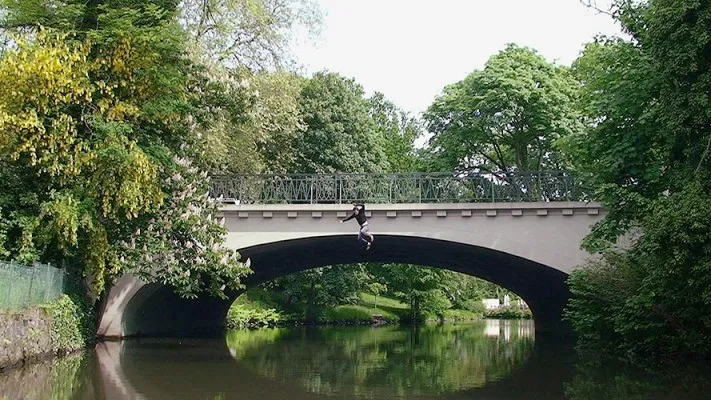
Bridges (2011)
In this artwork by Sebastian Stumpf, the artist suddenly jumps off the bridges in Berlin and some other cities. But as soon as he disappears in the water, everything goes back to normal, like it never happened. With this artwork, he interferes with the life’s regularity with humor and drama elements.
Site-Specific Art
The term site-specific refers to a work of art designed specifically for a particular location that has an interrelationship with the location. Site-specific or Environmental art involves an artist’s deliberate intervention in a particular location, where the artwork becomes a seamless part of its surroundings, exploring its connection to the landscape. It can be indoors or outdoors, in an urban area or an empty desert, close to the ocean or far inland. The term site-specific is often used when talking about installation art or land art.
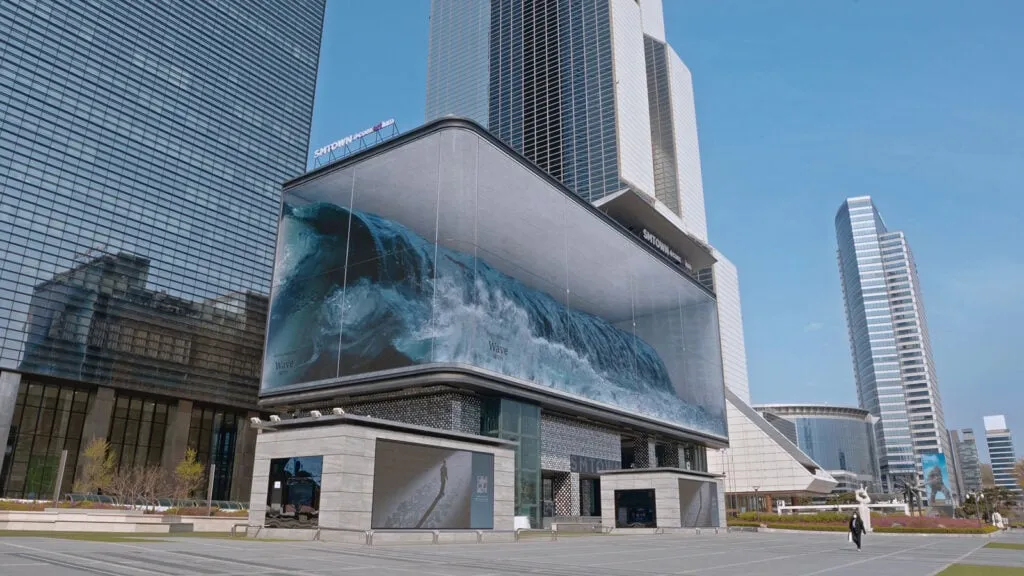
Wave
Wave, a public art installation crafted by D’Strict, consists of a high-definition 180-degree screen projecting a massive wave crashing on loop. With a height of 20 meters and a width of almost 80, the lifelike numeric design is striking—and almost frightening to behold.
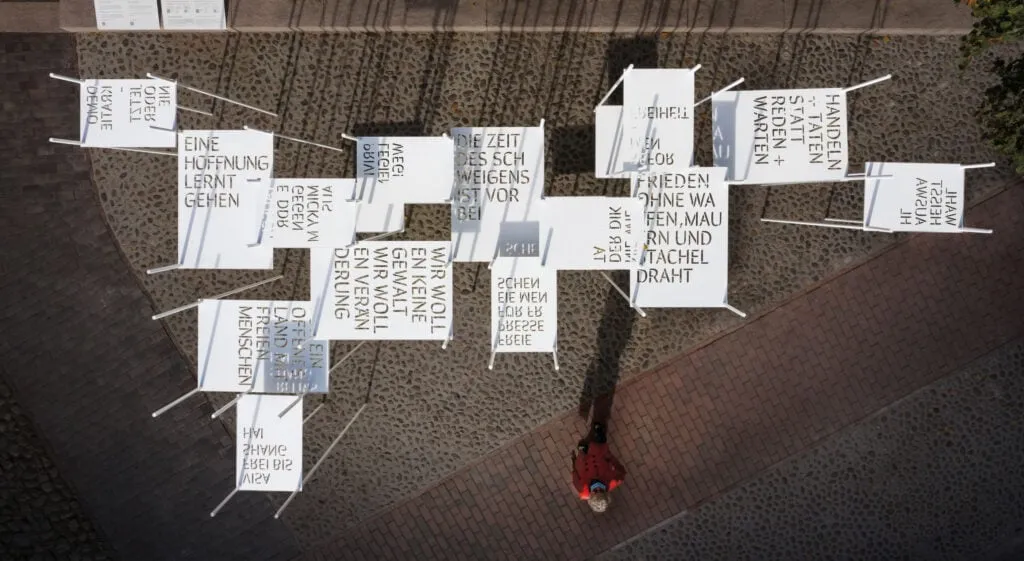
Perspectives on Freedom
Thought up by artistic duo Dagmar Korintenberg and Wolf Kipper, this pavilion-like installation aims to make the slogans of the Die Wende visible again in public space, as a tangible reminder of Germany’s (recent) fraught history. Images of the protest in 1989 are made available via an augmented reality app, so that visitors can point their devices up to the laser-cut lettering in the sky and observe the archival images—and they can even add their own contemporary photographs to the mix.
Installation Art
Basically, this term, installation art, is used to describe large-scale, mixed-media constructions, often designed for a specific location or for a temporary period of time. Although they may use materials that fill an entire room for their art, the artists believe that the most important center to which everything is directed is the viewer.
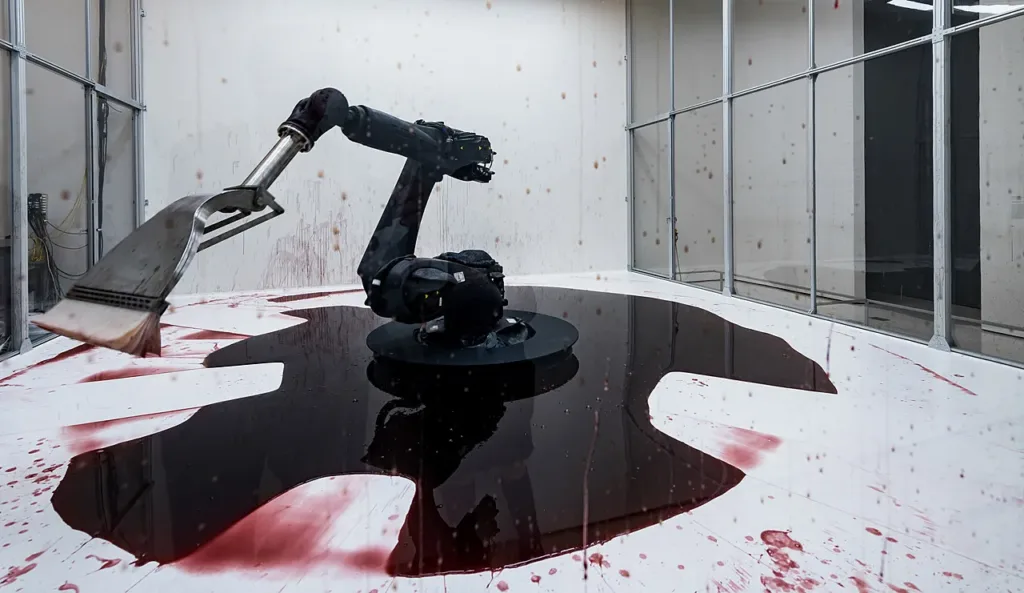
Can’t Help Myself
I am sure that at least half of the people who are reading this have seen this artwork before. If you didn’t, then let me explain it for you. Artists Sun Yuan & Peng Yu created this industrial robot that has only one goal: sweeping the leaking red liquid non-stop. When the sensors detect that the fluid has strayed too far, the arm frenetically shovels it back into place, leaving smudges on the ground and splashes on the surrounding walls.
The ultimate goal of this artwork was to evoke powerful physical, emotional, and psychological responses from their audience and prompt them to scrutinize the socio-political systems that plague today’s society, such as industrial violence at the border.
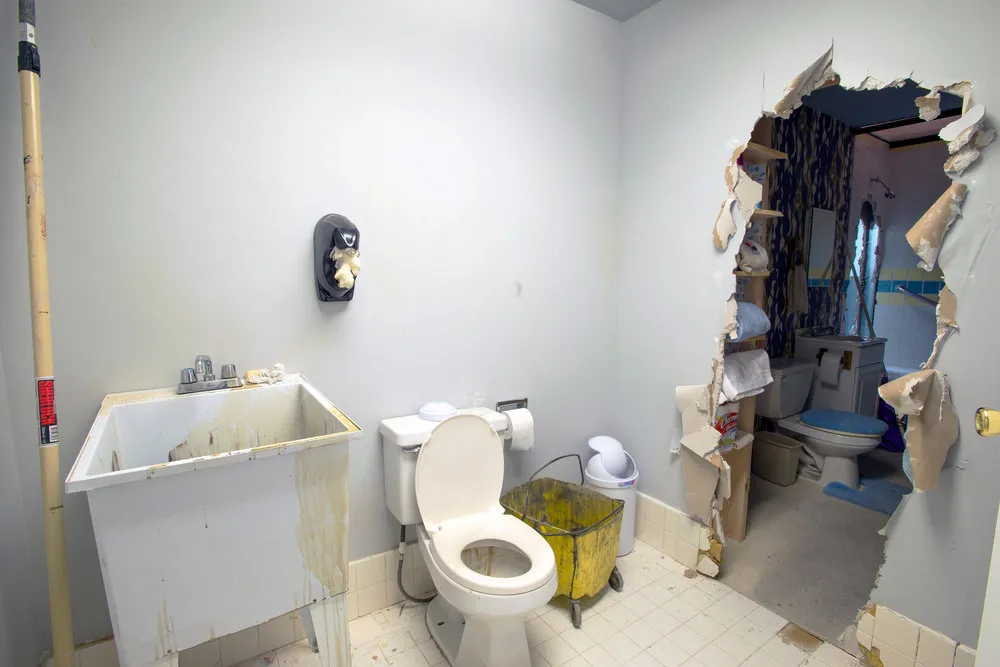
Stray Light Gray
Is a creative installation artwork by Jonah Freeman and Justin Lowe. A warren of corridors, chambers, and passageways is configured into a spatial collage that gives a fragmented vision of a parallel metropolis. As if the visitor has entered a bizarro New York City simulated in a foreign country where the details have been perverted in translation. The overall conglomeration is a system of architecture that forms a sculpture in its totality, a concept of the city as a clumsy monument whose symbolic identity is never fully materialized.
Performance Art
Tate defines performance art as artworks that are created through actions performed by the artist or other participants, which may be live or recorded, spontaneous or scripted. More recently, performance art has been understood as a way of engaging directly with social reality, the specifics of space, and the politics of identity.
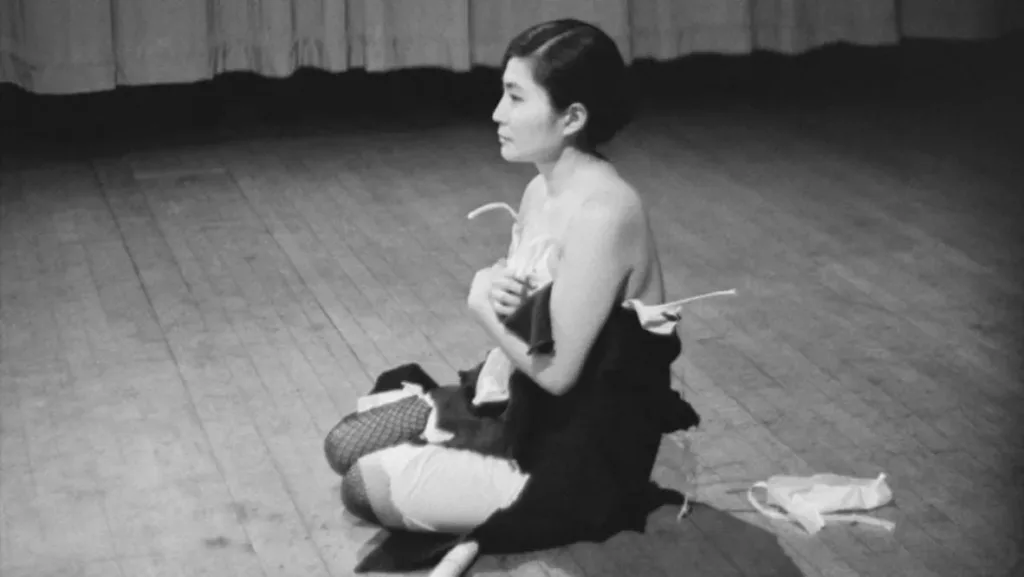
Cut Piece
This artwork was first performed by Yoko Ono in 1964. While she was sitting with a beautiful dress on a stage with scissors next to her, she invited viewers to cut a piece from her dress. Some of them cut a small piece of fabric, but some of them wanted to cut more. With every clip, it became clearer that what was really being stripped bare wasn’t the artist’s body, but the soul of everyone who grabbed the shears or silently watched.
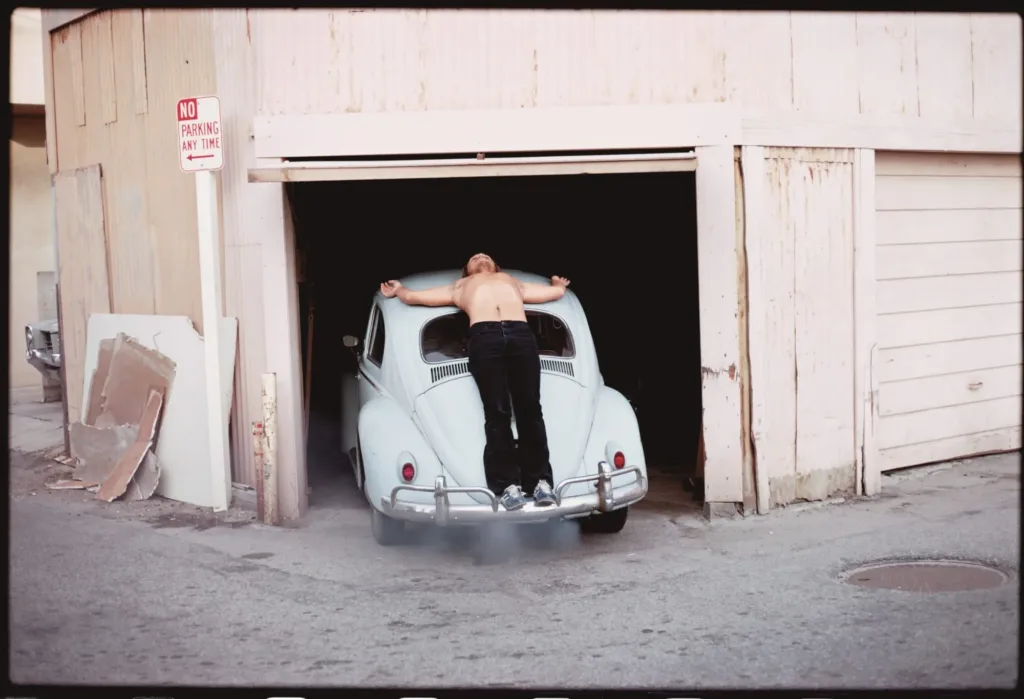
Trans-Fixed
For this performance, artist Chris Burden literally nailed himself to a Volkswagen Beetle. This artwork had a religious motive and was a reference to the crucifixion of Christ. Such an understanding is made possible by seeing these works within the context of conceptual art during the 1970s, where artists concerned themselves with art based on ideas and action rather than objects created for an elite art market.
Questions such as “What is art?” and “What is art supposed to accomplish?” are relatively new. It is a distinctly modern concept to create art that defies viewer expectations and artistic conventions. However, artists of all eras are products of the cultures and time periods in which they live. Contemporary artists are capable of expression and response to social issues in ways that artists of the past were not. In the Getty Center’s experience of contemporary art, the viewer’s criteria for judging works of art are different from the criteria used in the past. Viewers might ask, “Do I like the idea this artist is presenting?” instead of, “Do I like the way this looks?” An open mind goes a long way toward understanding and even appreciating the art of our time.