

The country of Poland is a unitary, constitutional republic located in Central Europe. Even though Poland has a unique history that goes back to the 10th century, it has been very thoughful. Their independence was subsequently cut by bigger empires. Then, when they got their freedom again, this time the Nazi boots were on the Polish soil. After the long years with the invasion, it ended up with the victory of allies, and Poland was free again. Unfortunately, this didn’t last long because the Soviets were waiting on the other side. Eventually the red bear of the Soviets dissipated from the stage of history. And from then on, Poland has been showing significant development in all fields. Like a fast train that is consistently fastening.
Compared to the past, Poland is currently stronger than ever. After being influenced by postwar communism, the country shifted to a market economy. Then they joined NATO, and later became members of the European Union. These are the results that the Poles attained in a relatively short period of time. Even though they are a member of the EU, they prefer not to utilize the euro as their currency. The Polish zloty (PLN) is still used as an official means of payment today.
Social Development
The significant improvement in Poland’s relative economic indicators over the past 25 years justifies labeling this period as a “golden quarter-century” in the context of the last three centuries of Polish history. This positive assessment is primarily based on GDP per capita, but it is further supported by substantial advancements in ecological indicators, enhanced access to cutting-edge technologies for households and businesses, and the increasing global mobility of Poles. Additionally, life expectancy has risen by approximately 10%. Recent years have also seen notable improvements in housing quality and public infrastructure. Collectively, these developments signify substantial progress in narrowing the civilization gap with the world’s most developed countries.
We can all agree that Poland’s growth has been based on the brainpower and hard work of the people. Unlike some countries that show significant development with using natural resources or financial steroids. All those results happened because Poland took the right steps from the beginning. In the European integration process, they adopted Western institutions, rules, and social norms that are at the foundation of economic development. Such as the rule of law, independent monetary policy, free press, and democracy. And the other improvement is expanding the quality of education. Today, every second young person studies at the university level, above the EU average. Finally, Poland also benefited from large inflows of EU funds that helped connect Poland with Western Europe by highways for the first time ever.
Economic Development
In 1989, the level of economic destabilization of the Polish economy was much bigger than the economies of other countries of real socialism. Even though Poland was the only country in the hyperinflation level among them. In this situation, the restoration of the economic balances had to become an urgent priority goal. Research shows that the conducted economic transformation of all countries of real socialism and Central Europe with former USSR countries has shown great similarities. The fact that in all the countries, when the big systemic reforms adopted, they were fast and, in the majority of cases, radical.
The Polish economy regained its growth capacity sooner than others. One of the main reasons is the reforms before 1989, as a result of which the private sector in 1989 represented a much bigger share in the economy than elsewhere. Liberalizing reforms in the period of economic transformation resulted in an extreme growth of the new private sector.
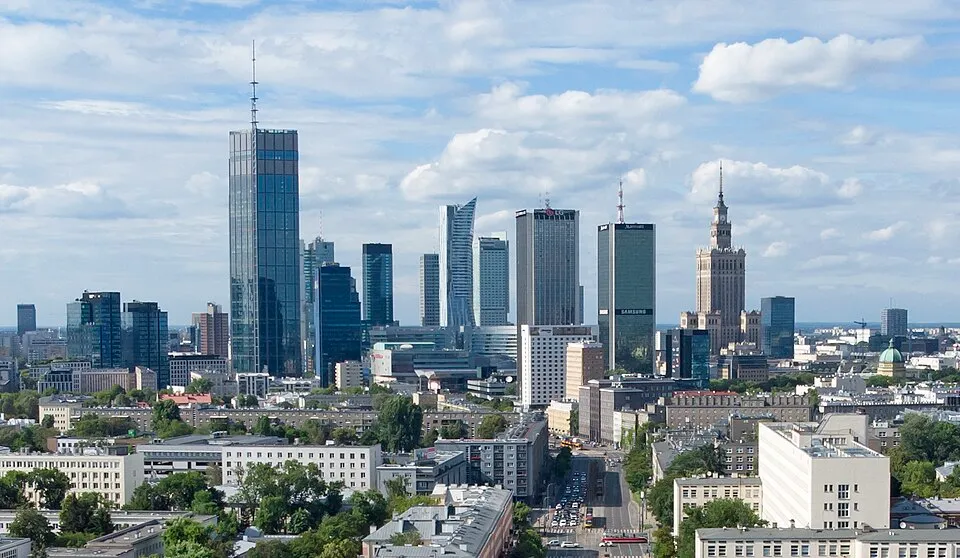
In 1992–2013, GDP per capita in Poland grew twice as fast as in the most developed EU countries. Even with the significant economic progress, there are some arguments about the economic transformation too. The most famous line about the economic program that was conducted is:
“The so-called shock therapy was truly a shock without a therapy.”
Besides of the arguments, we can say that the introduction of legal and institutional reforms of the market economy, among other things, enabled Poland to join the European Union in 2004. A success of economic policy includes the avoidance of a crisis in the financial sector. Poland belongs to a small group of countries that have managed to not effected such crises in the last 25 years.
Poland Today
Country of Poland now has a $24.000 GDP per capita and an unemployment rate of 5 percent. In international well-being indexes such as the OECD Better Life Index, Poland does better than what the income level alone would suggest. Besides the economy, the country’s sports results show a significant improvement in this field. Both football and tennis, they raised one of the most popular and successful athletes in recent years (Robert Lewandowski, Iga Świątek).
Of course, Poland still has some way to go. Like, the World Inequality Index report shows that income inequality is relatively high for a European country. And in the case of wealth inequality, average household wealth in Poland is lower than in Western European countries. Even the bottom 50 percent of people have more debts than assets. On the gender equality side, Poland is significantly above the world average. The female labor income is equal to 40 percent. That means women in the labor force are strong in Poland.
Poland’s performance in the last 25 years has been not much short of a miracle. But the race to catch up West is not over. Further reforms are needed, especially as regards innovation and population aging, for a prosperous nation.
Did You Know That?
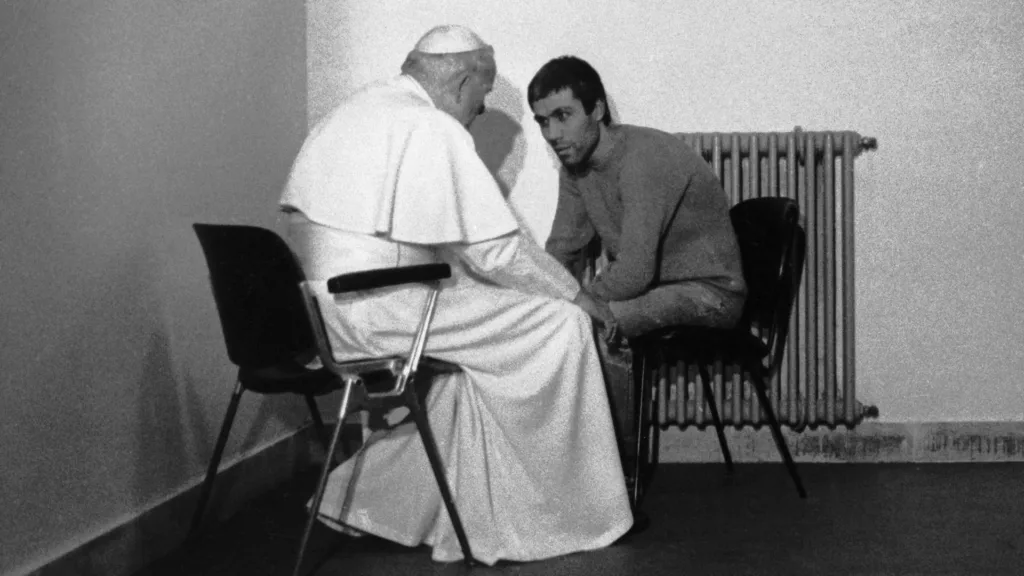
The first and only Pope of Poland, John Paul II, was attempted assassinated on 13 May 1981 by the Turkish hitman Mehmet Ali Ağca. The Pope was saved after a long medication and pardoned Ağca. Before this, the same hitman killed the famous Turkish journalist Abdi İpekçi.
sources
Stanisław Gomułka, Poland’s economic and social transformation 1989–2014 and contemporary challenges, Central Bank Review, Volume 16, Issue 1, 2016
https://www.worldbank.org/en/country/poland/overview
In writing this essay, various AI tools were utilized to enhance research, improve clarity, and streamline the overall composition.

